
46% Fear Counterfeit Products Online: How Cryptographic Scan Telemetry Catches "1:1 Replicas"
The E-Commerce Standards Index (N=2,530) reveals what destroys online shopper trust most: unresolved damaged orders (48%) closely followed by counterfeit/replica fears (46%)—even surpassing personal data breach worries (45%). Discover why static barcodes fail against super-fakes and how İzSor unit-level counters expose cloned labels.
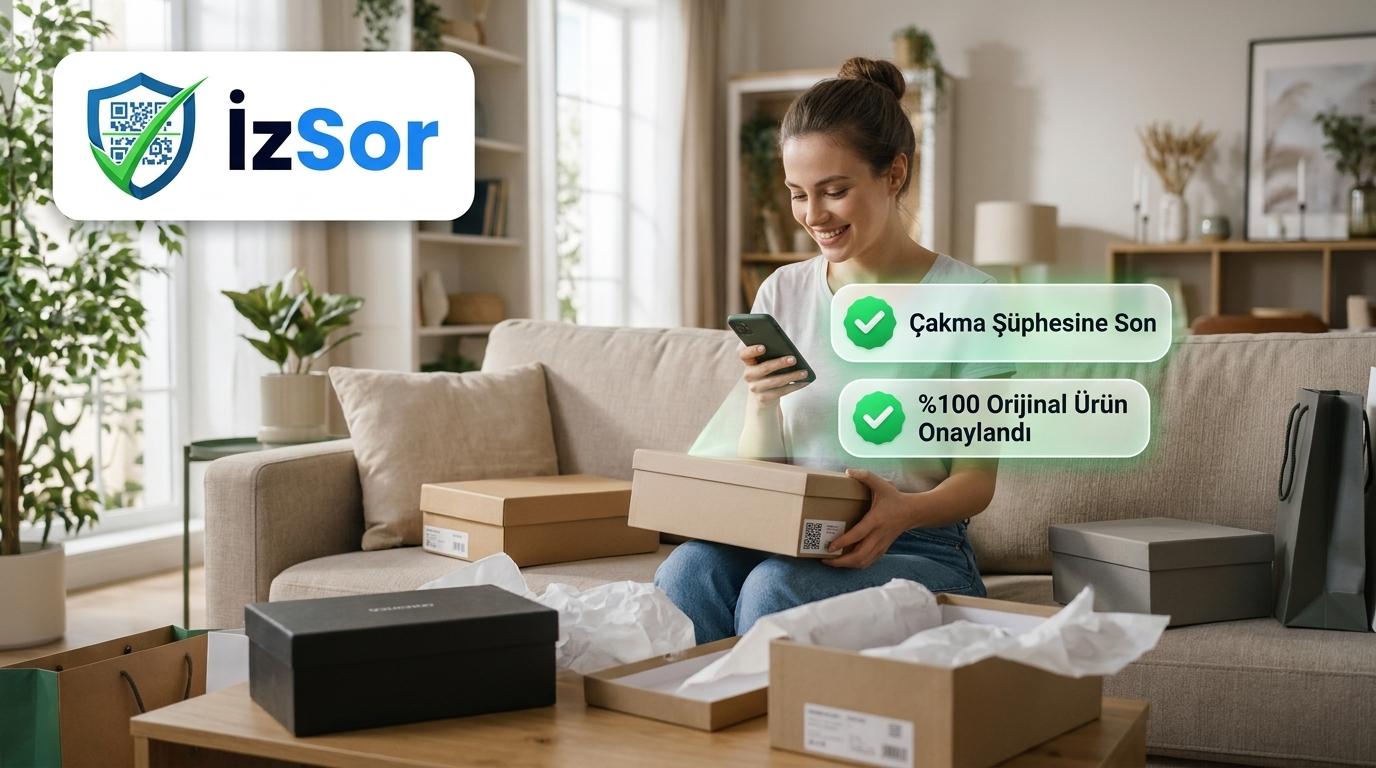
01. What Breaks E-Commerce Trust: Counterfeits Now Outrank Data Breaches
Veri Enstitüsü’s national E-Commerce Standards Index measured the top factors driving shoppers away from online retailers:
Unresolved Damaged/Wrong Items & No Support Contact
Receiving broken or wrong deliveries with nobody taking responsibility.
Fear of Receiving Counterfeit or Replica Goods
Almost half of all digital buyers cite counterfeit uncertainty as a top trust breaker.
Personal Data & Payment Breach Anxiety
Historically #1, cyber anxiety now ranks behind physical product authenticity fears.
Hidden Checkout Fees & Misleading Pricing
Surprise shipping markups or opaque discounting tactics.
02. Why Visual Checks & Static Barcodes Fail Against '1:1 Super-Fakes'
Modern counterfeiters replicate stitch geometry, holographic stickers, and static EAN barcodes so accurately that neither customers nor warehouse staff can detect them visually:
High-Risk Replica Categories
Footwear, branded apparel, cosmetics, and compact electronics frequently enter gray channels carrying lookalike tags and forged paper invoices.
Photocopied Single-SKU Barcode Trap
Cloning one genuine box barcode across 10,000 fake units passes standard public SKU lookups every time.
Marketplace Commingled Inventory Exposure
When unauthorized sellers list under a legitimate brand catalog page, buyers face lottery-style authenticity risks.
Need for Timestamped Buyer Dispute Proof
During return or consumer arbitration disputes, shoppers need verifiable scan anomalies rather than subjective 'looks fake' photos.
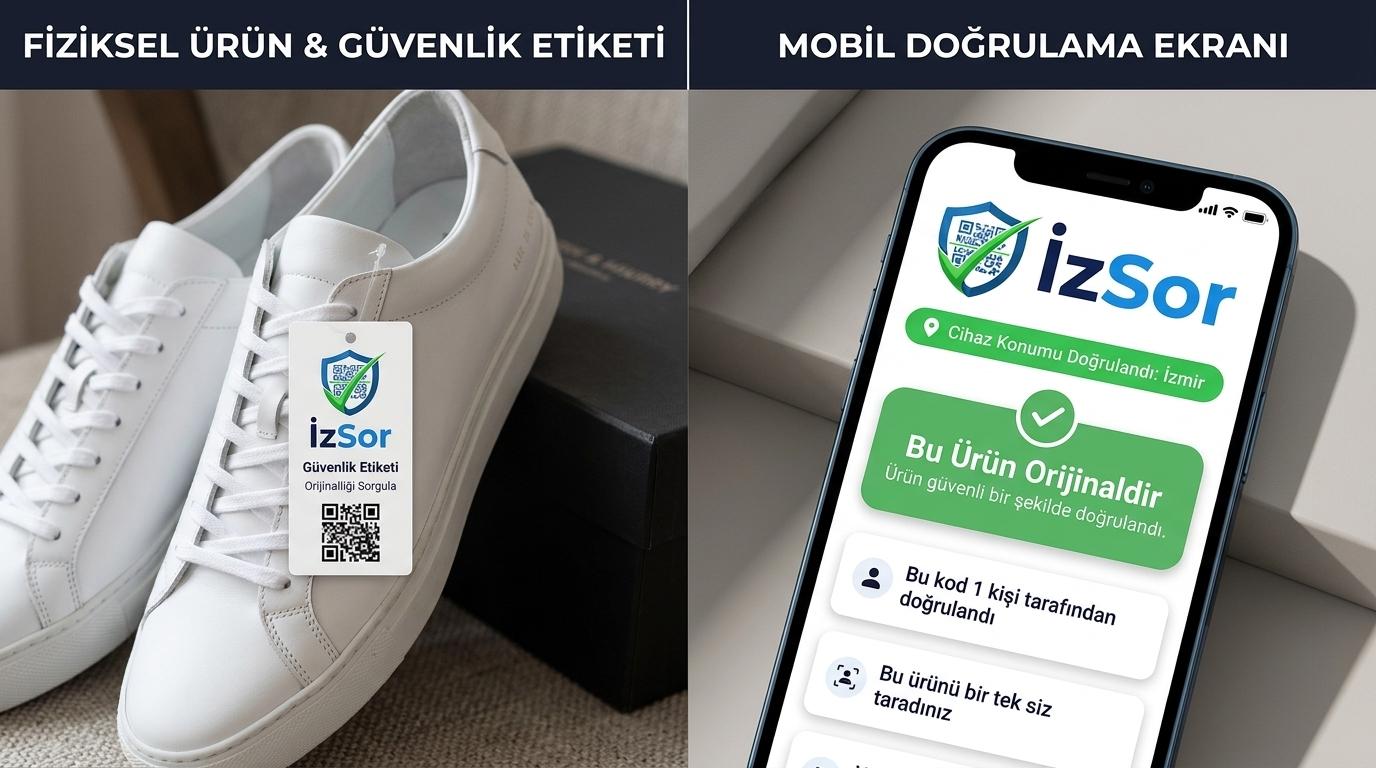
03. 3-Step Consumer Replica Detection Protocol With İzSor
Any smartphone camera verifies authenticity in under a second with zero app download:
Scan the Sealed Inner Unit Code
If you scan a public outer box tracking ('T') code first, İzSor alerts you to inspect the concealed scratch-off/inside ('D') unit code strictly meant for the buyer.
Confirm '1 Person Verified' or Catch Multi-Scan Clones
Genuine unopened units confirm 'This Product is Genuine', 'Verified by 1 person', and 'Only you have scanned this product.' Cloned codes pasted onto multiple replicas trigger immediate multi-scan alerts.
Device Location Telemetry & Dispute Documentation
Scans log GPS city telemetry. If anomalous multi-person scans occur, shoppers are advised to retain their invoice for return/consumer arbitration while brands receive instant counterfeit-hotspot alerts.
04. The Merchant ROI Side: Turning Authenticity Into Conversion
Want to see how the same survey shows 69% of shoppers refusing 10% cheaper listings from untrusted stores—and how brands profit from replacing discounts with trust seals?
Companion Dossier · Brand Economics & ConversionTrust Beats Price in E-Commerce: 69% Reject Cheaper Unverified Sellers →
Explore D2C margin protection strategies and see why price drops to #5 while trust leads at #1.
05. Frequently Asked Questions (FAQ)
What are the top two trust breakers in online shopping?▼
Unresolved damaged/wrong order disputes (48%) and fear of receiving counterfeit or replica goods (46%), edging past payment/data breach concerns (45%).
If counterfeiters photocopy an İzSor QR tag onto fake sneakers, how is it caught?▼
Each concealed 'D' unit code tracks unique scan counts and device locations. As soon as a copied label is scanned by a second buyer or across unexpected cities, instant multi-scan alerts warn the shopper and alert the brand.
Do consumers need to install a specialized mobile app?▼
No—any standard iOS or Android camera opens the encrypted verification view directly in the browser.
Can shelf browsers scan the inner unit code before I buy it?▼
No—'D' unit codes sit beneath scratch-off foil, tear strips, or inside sealed packaging, protecting first-opener exclusivity for the actual customer.
06. Data & Legal References
• Veri Enstitüsü (2026). Türkiye E-Commerce Standards Index (N = 2,530; trust-breakers: 48% unresolved defects, 46% counterfeits, 45% data breach, 25% hidden costs).
• Consumer Protection Law No. 6502 (Defective Goods & Arbitration Dispute Evidence).
• İzSor Cryptographic Verification Engine (HMAC-SHA256 / CSPRNG Serial Generator & Anomaly Map).
Replace Buyer Doubt With First-Scan Certainty
Deploy unclonable unit-level tags across footwear, apparel, and electronics—giving shoppers mathematical proof against 1:1 replicas.