Sold as "100% Cotton," Delivered as "100% Polyester": 1,083,706 TL Fine Signals Era of Digital Textile Verification
After online cushion covers advertised as "100% cotton" arrived with sewn care labels reading "100% polyester," Turkey’s Ministry of Trade Advertising Board imposed a 1,083,706 TL fine and ad suspension. The case highlights Law 6502, EU Textile Regulation 1007/2011, "Apparent Producer" liability under Law 7223, and cryptographic QR traceability.
01. Inside the Case: "100% Cotton" Online, "100% Polyester" on Delivery
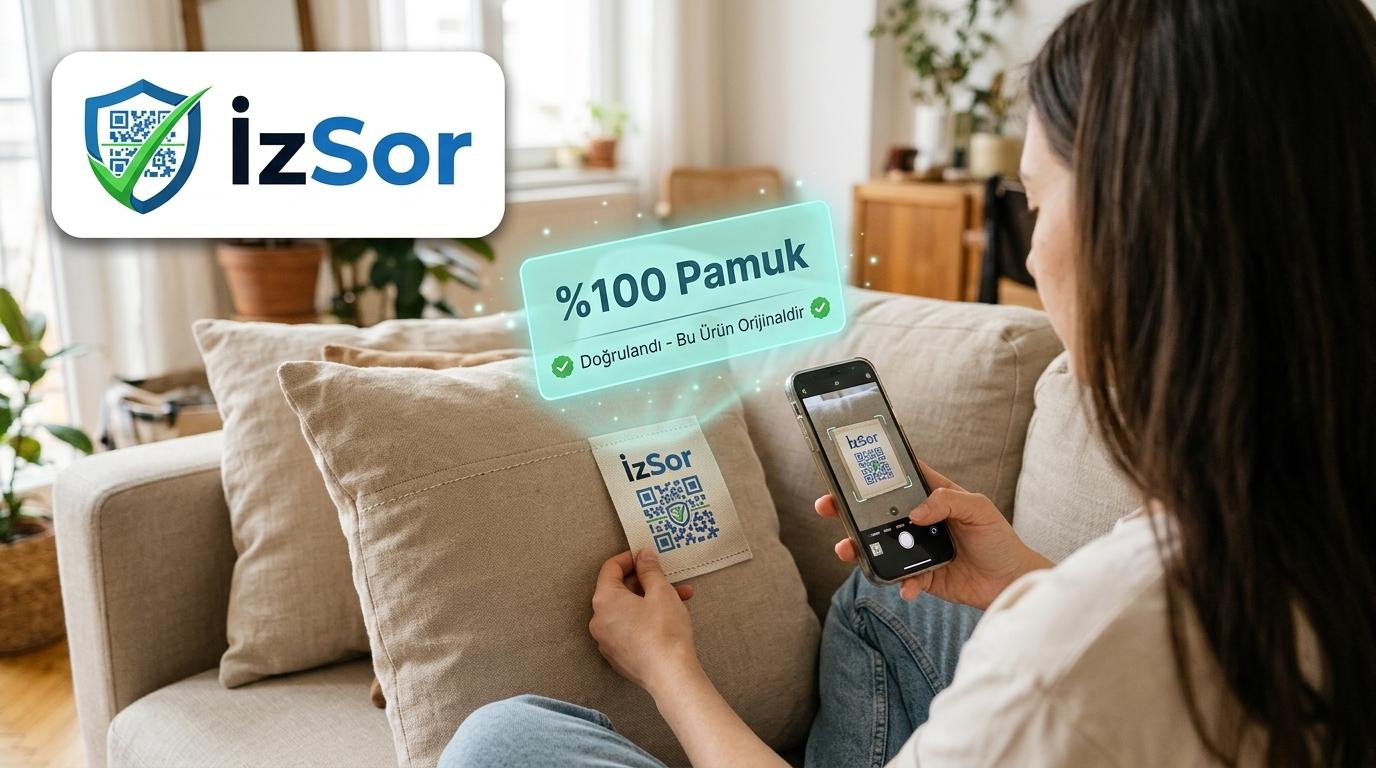
Because online shoppers cannot touch textile weave before checkout, purchasing decisions rely heavily on product titles and composition specifications. In the enforcement case publicized on November 7, 2026, buyers ordering cushion covers advertised as "100% cotton" discovered sewn interior care labels stating "100% polyester."
Upon inspection, the Ministry of Trade Advertising Board confirmed the contradiction between online product claims and physical composition, issuing a 1,083,706 TL administrative fine and halting the campaign. Textile fiber labeling is anchored by three statutory frameworks:
- Consumer Protection Law No. 6502 (Article 61): Mandates truthful, verifiable commercial advertising. Shipping synthetic polyester against natural cotton claims constitutes deceptive advertising and defective performance.
- EU Textile Labelling Regulation (EU) No 1007/2011 & National Mirror Rules: Restricts fiber denominations such as 'cotton', 'wool', or 'silk' to verified material percentages; discrepancies trigger domestic market withdrawals and EU customs rejection.
- EU ESPR (EU) 2024/1781 Textile Digital Product Passport (DPP): To counter cut-off or falsified care labels, the EU is transitioning textile composition and supply chain records onto immutable machine-readable QR Digital Product Passports.
02. Why Sewn Labels Fall Short: The "Apparent Producer" Trap
Label distortion does not only stem from negligent merchants—honest brands producing genuine 100% cotton textiles are frequently impersonated. When illicit workshops stitch cloned brand care labels onto cheap polyester stock, four acute business risks arise:
Law No. 7223 "Apparent Producer" Burden of Proof
Under product safety statutes, any entity whose name, trademark, or label appears on a non-compliant item found in commerce faces primary producer liability unless it provides concrete evidence that the unit is an unauthorized counterfeit.
Woven & Printed Care Labels Are Easily Cloned
Conventional woven tags and static EAN barcodes can be duplicated in days, leaving inspectors and consumers unable to distinguish factory stock from gray-market replicas.
Unfair Competition & Marketplace Erosion
Brands investing in combed long-staple cotton suffer severe rating drops and trust erosion when counterfeit listings mimic their SKU photos and deliver polyester substitutes.
Timestamped Digital Audit Evidence Required
Verbal denials carry little weight in ministry audits or marketplace disputes; brands require encrypted telemetry logging exactly where and when legitimate batches were scanned.
03. İzSor Textile Shield: Pairing "D" Unit Authenticity with Encrypted "T" Tracking
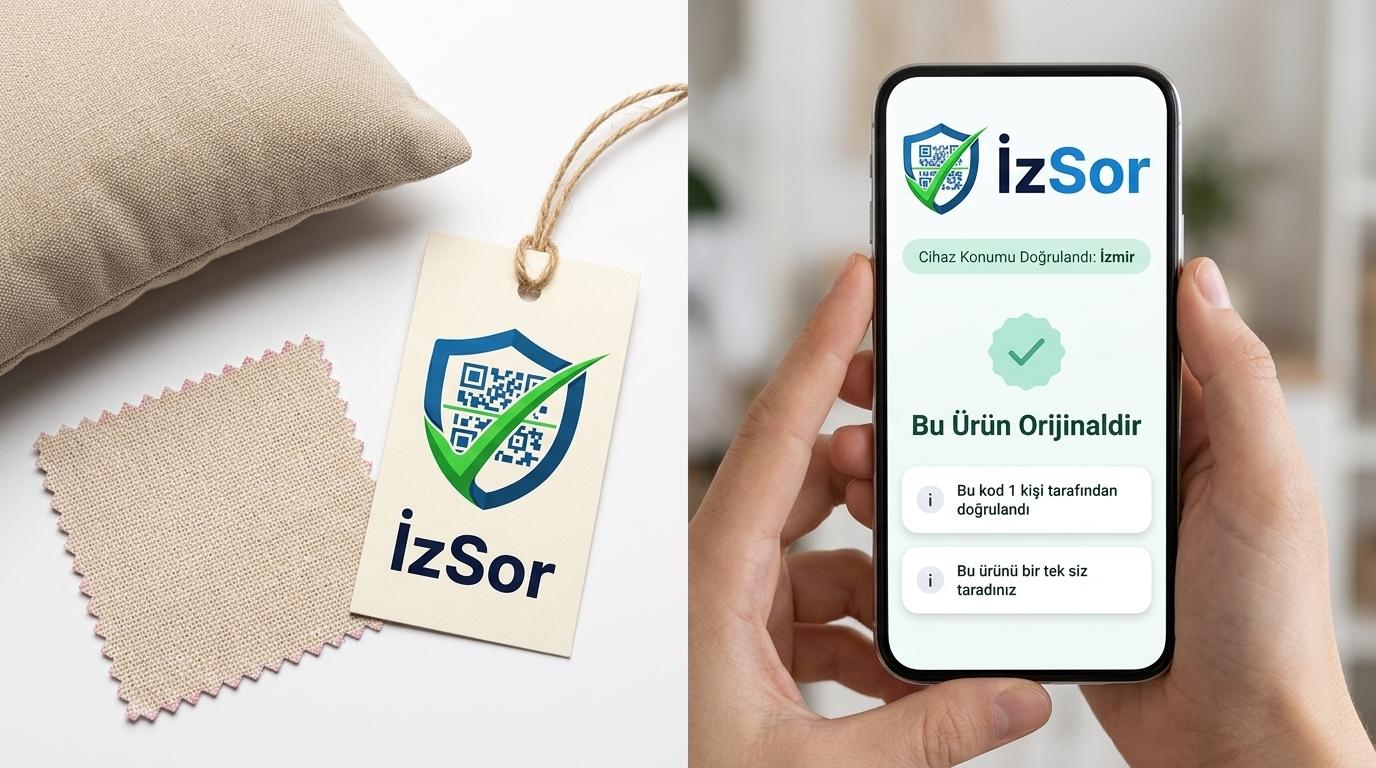
İzSor assigns cryptographically signed 14-character HMAC-SHA256 + CSPRNG codes that cannot be guessed or sequentially fabricated. Respecting real-world garment and home-textile assembly constraints, İzSor deploys two complementary verification layers:
Tamper-Evident Hangtags & Sealed Packaging Verification
- Applied beneath scratch-off panels on sealed linen boxes, hangtags, or garment pouches.
- First buyer receives immediate assurance: 'This Product is Genuine', 'Verified by 1 person', and 'Only you have scanned this product'.
- Displays immutable fiber composition ('100% Cotton'), lot ID, and manufacturer metadata locked at the mill.
- If a counterfeiter duplicates a label onto synthetic goods, subsequent scans trigger instant multi-scan alerts.
Channel Location Telemetry & Law 7223 Evidence
- Where stitching disposable scratch seals directly into fabric is impractical, encrypted 'T' tracking codes on care tags/polybags monitor lifecycle scans.
- Every scan records device GPS verification, timestamps, and regional heatmap coordinates in the brand dashboard.
- Unauthorized distribution cities or clone bursts instantly trigger anomaly warnings even if labels were physically copied.
- Equips legal teams with exportable proof demonstrating legitimate batch destinations to defeat Apparent Producer claims.
Enclosed boxed sets gain airtight single-opener sealing, while open-display cushions, towels, and garments gain channel-wide anti-clone location telemetry that withstands counterfeit duplication.
04. Preparing for EU Textile DPP & Eliminating Chemical Fiber Risks
Undisclosed polyester substitutions often signal broader uninspected dyeing shortcuts carrying dermal chemical risks. By integrating İzSor encrypted QR infrastructure today, textile manufacturers gain protection against million-lira domestic advertising fines while standing ready ahead of the EU ESPR (EU) 2024/1781 Textile Digital Product Passport rollout.
Related Textile Safety DossierToxic Textiles & Fiber Fraud: Dermal Chemical Absorption and EU DPP Compliance Guide →
Read our peer-reviewed research on azo dyes, PFAS thresholds, and the 20,000-tonne organic cotton certificate fraud.
05. Frequently Asked Questions (FAQ)
Under which law is shipping "100% polyester" instead of advertised "100% cotton" penalized?▼
Misrepresenting product composition breaches Article 61 of Turkish Consumer Protection Law No. 6502 (deceptive commercial advertising), triggering heavy Advertising Board administrative fines—such as the 1,083,706 TL penalty in this case—and mandatory campaign suspension.
How does "Apparent Producer" liability under Law No. 7223 put honest textile brands at risk?▼
If a non-compliant or mislabeled counterfeit bearing a brand’s name is seized on the market, authorities treat the named brand as the Apparent Producer unless the company proves through verifiable records that the item did not originate from its production.
How can İzSor protect fabrics if stitching disposable scratch codes onto soft textiles is difficult?▼
Sealed textile packaging and rigid hangtags accommodate concealed 'D' scratch-off verification codes, while encrypted 'T' tracking codes track GPS scan patterns across sales channels so cloned tags trigger instant geographic anomaly alerts and produce legal evidence.
What does a consumer see when scanning an authentic İzSor textile tag?▼
No app download is required. A standard phone camera scan reveals the manufacturer-locked material ratio, batch provenance, GPS location check, and confirmation of single-opener exclusivity ('Verified by 1 person').
Do home textiles and everyday garments require CE marking?▼
No. Standard apparel and home textiles fall outside CE directives; they are governed by EU Textile Regulation (EU) No 1007/2011, REACH chemical limits, and upcoming ESPR (EU) 2024/1781 Textile Digital Product Passports.
06. Regulatory & Case Citations
• Republic of Türkiye Ministry of Trade Advertising Board Decision (reported Nov 7, 2026) — 1,083,706 TL administrative fine regarding misleading "100% cotton" online cushion listing.
• Consumer Protection Law No. 6502 (Article 61 — Deceptive Commercial Advertising).
• Product Safety and Technical Regulations Law No. 7223 (Economic Operator & Apparent Producer Liability).
• Regulation (EU) No 1007/2011 of the European Parliament and of the Council on textile fibre names and related labelling.
• Regulation (EU) 2024/1781 (ESPR — Ecodesign for Sustainable Products & Digital Product Passport).
• İzSor R&D (TÜBİTAK 1812 BİGG & Patent Filing 2026/003341). Cryptographic Dual-Key QR & Encrypted Tracking Architecture.
Shield Your Brand From Fake Labels & Seven-Figure Fines
Deploy İzSor cryptographic QR tags and encrypted channel tracking across apparel and home textile lines—proving genuine fiber quality in a single scan.