
50,000 Tonnes of Fake Olive Oil Exploit the "Ayvalık" Name Annually: Digital Geographical Indication Protection With İzSor
Industry findings presented at the 21st International Ayvalık Olive Harvest & Tourism Festival reveal ~50,000 tonnes of adulterated olive oil sold yearly in Türkiye, overwhelmingly misusing the prestigious 'Ayvalık' origin name through 50+ shell companies. Tamper-evident bottleneck and tin spout İzSor crypto-seals protect honest producers and consumers alike.
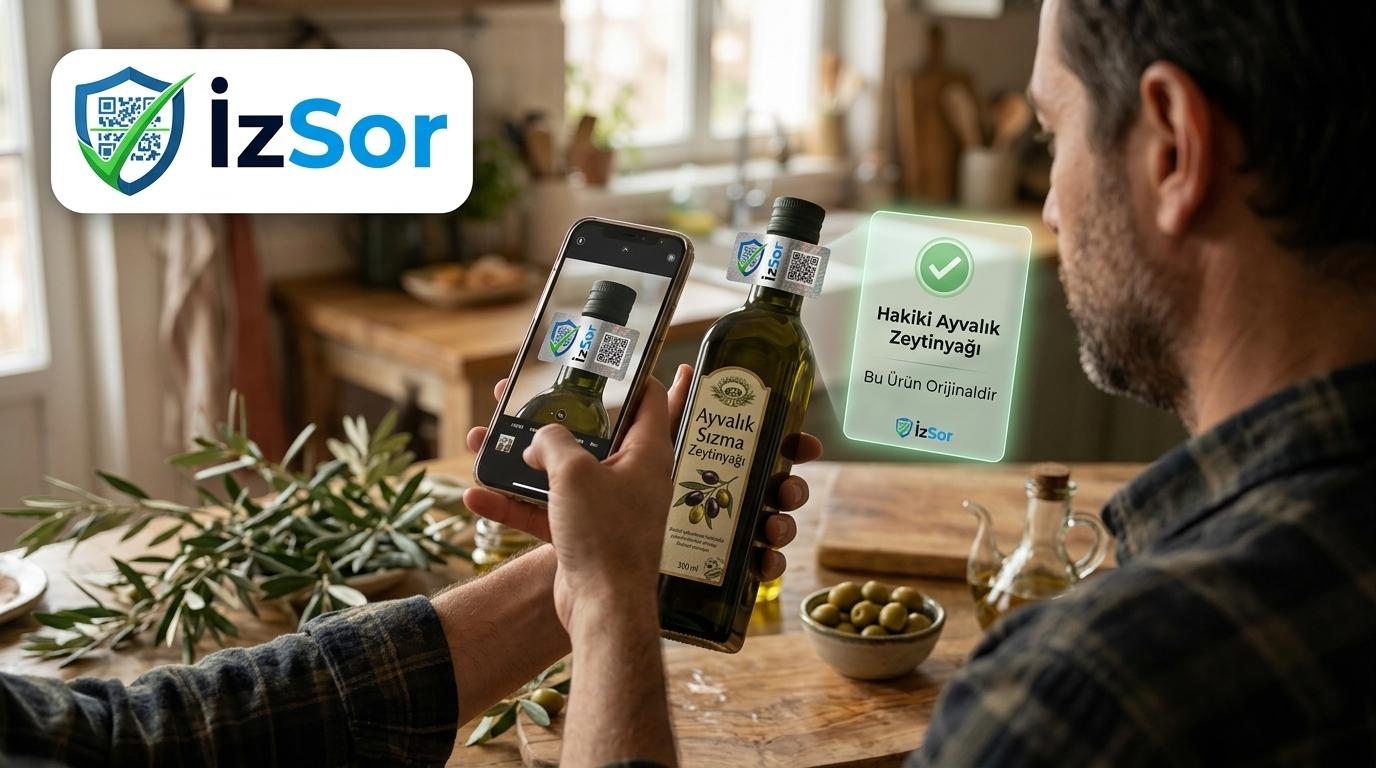
01. Warnings From the Harvest Festival: How the 'Ayvalık' Name Is Exploited
Speaking during the 21st International Ayvalık Olive Harvest & Tourism Festival, municipal leaders and trade chamber executives detailed the anatomy of the olive oil adulteration network:
"When we inspect labels, addresses have nothing to do with Ayvalık. We call and ask them to describe where they are in Ayvalık—they can’t even describe the town. Once fined, they immediately rebrand under a new company and keep selling adulterated oil as Ayvalık."
Reported volumes reaching up to 2,000 tonnes per month in certain provinces marketed as fake 'Ayvalık olive oil,' backed by fictional addresses like 'Ayvalık 4. km' and over 50 shell companies formed solely to sidestep penalties.
"The exact same individuals repeat this adulteration 70 to 80 times under fresh storefronts. Selling 1 liter of authentic olive oil for 100 TL is economically impossible. Consumers must verify whether a real reachable producer exists at the listed address."
02. Statutory Food & Origin Framework: Laws 5996, 6769 SMK & EU Reg 178/2002
Olive oil sits under strict veterinary/food safety enforcement and industrial property law rather than industrial machinery directives:
Veterinary, Plant Health, Food & Feed Law No. 5996
Adulterating extra virgin olive oil with cheaper seed oils violates food safety and Turkish Food Codex Communiqué rules, triggering public ministry disclosure (GGBS), heavy fines, and criminal prosecution.
Industrial Property Law No. 6769 (Geographical Indications)
'Ayvalık Olive Oil' is a legally registered Geographical Indication. Unauthorized bottlers outside regional harvest/pressing standards commit actionable IP infringement.
EU General Food Law (Article 18 Batch Traceability)
Export and domestic distribution require verifiable one-step-back, one-step-forward lot provenance from grove pressing to bottling.
EU Packaging & Packaging Waste Regulation
While olive oil itself follows food law, exported glass bottles and tin containers align with upcoming EU recyclable-packaging data transparency rules.
Compliance Note: CE Marking Never Applies to Food or Olive Oil
Some counterfeit stalls unlawfully print fake CE symbols to imply European inspection. Under Regulation (EC) No 765/2008 Article 30(2), affixing CE markings to food or olive oil is strictly illegal. Genuine compliance relies on Ministry Business Registration Numbers (TR-xx-K), geographical indication registries, lab acidity/peroxide testing, and tamper-evident unit verification.
Read why CE marking is absent & prohibited on food and cosmetics →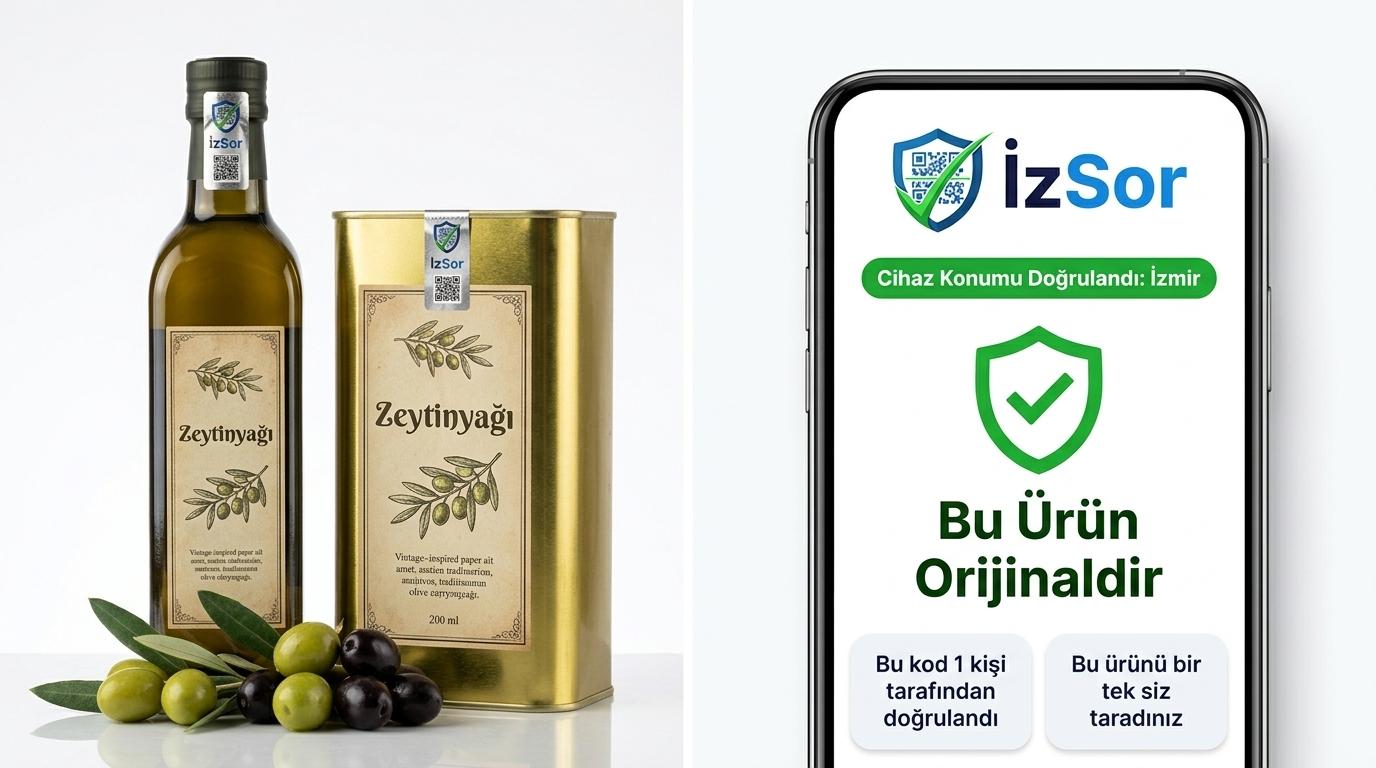
03. Sealing Bottles & Tins With İzSor: How Cryptographic Verification Beats Shell Rings
While shell firms replicate tin artwork overnight, İzSor binds each container's physical seal to a unique cryptographic ledger:
Tamper-Evident Bottleneck Collars & Tin Pour-Spout Seals ('D' Code)
Concealed 14-char HMAC-SHA256 codes sit under break-away bottleneck collars or pull-tab tin spouts. Opening and scanning confirms 'This Product is Genuine' and 'Verified by 1 person'—blocking refilling of salvaged empty tins or cloned labels.
Eliminating Fictional '4th km' Addresses
Instead of unverified print, the verified scan page displays the producer's authenticated corporate identity, Ministry GGBS Facility Number, harvest season, acidity/peroxide batch test record, and GI certification.
GPS Anomaly Heatmaps for Chambers & Cooperatives
Real-time 'Device Location Verified' telemetry reveals unauthorized regions where copied codes suddenly spike, giving trade chambers actionable forensic evidence for inspections.
04. 4-Point Buyer Checklist for Authentic Olive Oil
Before pouring olive oil onto your family table, verify these four essentials:
- Reject impossible pricing: Genuine extra virgin olive oil cannot be produced, bottled, and shipped below raw agricultural cost (e.g., 100 TL/L offers).
- Check reachable corporate credentials: Look up the GGBS facility registration and real physical address rather than vague highway-kilometer labels.
- Scan the unbroken bottleneck bandrol or under-spout seal and confirm single-opener exclusivity ('Verified by 1 person').
- If alerted to multi-person cloning, do not consume—retain your receipt and report via official food safety hotlines.
05. Frequently Asked Questions (FAQ)
How much adulterated olive oil is estimated to circulate annually in Türkiye?▼
Sector representatives at the 21st Ayvalık Olive Harvest Festival reported ~50,000 tonnes of adulterated olive oil yearly, heavily exploiting the protected 'Ayvalık' origin name.
How does İzSor prevent criminals from refilling genuine branded olive oil tins?▼
Single-use 'D' security codes are integrated beneath break-away pour spouts or neckband collars. Once opened and scanned by the first legitimate consumer, the seal locks; any cloned label or reused container triggers instant multi-scan alerts.
Should authentic olive oil carry a CE mark?▼
Never. Under EU Regulation 765/2008 and Law 5996, CE marking is prohibited on foods. Authenticity relies on GGBS facility registration, GI protection (Law 6769), batch analysis, and tamper-evident traceability.
How do cooperatives and trade chambers monitor misuse via İzSor?▼
Federated analytics dashboards highlight geographic scan clusters outside authorized producer networks so chambers can initiate rapid legal enforcement.
06. References & Legal Framework
• 21st International Ayvalık Olive Harvest & Tourism Festival — Official remarks by Mayor Mesut Ergin, ATO President Halil Aykut, and ATO Young Entrepreneurs Chair Mustafa Kürlek.
• Law No. 5996 on Veterinary Services, Plant Health, Food and Feed & Turkish Food Codex Olive Oil Communiqué.
• Industrial Property Law No. 6769 (SMK — Geographical Indication Protection).
• Regulation (EC) No 178/2002 (General Food Law Traceability) & Regulation (EC) No 765/2008 (CE Scope Rules).
Seal Your Geographical Indication Heritage on Every Bottle and Tin
Equip cooperatives, boutique mills, and olive oil exporters with unclonable bottleneck & spout verification seals.